Showing posts with label warlocks. Show all posts

Sunday, 8 September 2019

Spending your loot, part 4: labs, libraries and shrines

My house rules are costing me prep time and that will not do. I give you quicky rules for laboratories, libraries and shrines that allow players to invest in learning new spells.

Spellcasters in Belswick have to buy or find new spells in stead of getting them for free when they level, which means that I have to look ahead and drop spellbooks every now and again. Tedious work. Much easier to have them sort this out themselves. Rather than revoke, I'll patch and try to tie this into the rules for characters growing rich off of dungeoneering.

SHRINES, LABS AND LIBRARIES

Standing house rule: all my spellcasters except nature types have to earn their spells, they don't get new spells whenever they level. By collecting tools of the trade, they can now outfit a workshop to experiment and learn new tricks.

Shrines are for divine casters (clerics, some bards), libraries are for arcane casters (some bards, sorcerers, warlocks and wizards) and laboratories are for potion brewers. Each type of workspace has a couple of suggested items to stock it with - use this as a starting point and get your player's input on what they'd like to furnish their workspace with.

As a bonus, most of this stuff is fragile or hard to move, meaning you need a place to store it - save up for that home base!

LABORATORY

Includes a basic workshp with glasswork and supplies, but also recipe books and rare components.

Gain two potion recipes every time you gain a level. You can benefit from only one laboratory each time you level up. Must have the ability to brew potions (potionmaking skill) to benefit from a lab.
  • common laboratory: 100 gp, common potion recipes
  • uncommon laboratory: 250 gp, uncommon potion recipes
  • rare laboratory: 500 gp, rare potion recipes
  • very rare laboratory: 1000 gp, very rare potion recipes 
  • legendary laboratory: 2000 gp, legendary potion recipes

From Life of the Party - Realities of an RPGer


Lesser books
Value is 25-50 gp, depending on the state of the copy, quality of notes in the margins etc.
  • Sprinkwurtle's Arcanofauna - wildly speculative book on cryptids
  • The Hermetic and Alchemical Writings of Aureolus Philippus Theophrastus Bombastus von Hohenheim - self-aggrandizing pamflet on the claimed workings of Paracelsus the Great
  • The Sage's Garden - primer on herbalism

Greater books
Value is 50-100 gp, depending on state of the copy, missing pages etc.
  • A Discourse of Fire and Salt - on refining alchemical components
  • Essences and Transfusions - on distillation and transferal of properties
  • The Book of Smokeless Fire - Almad poems on alchemical recipes
  • The Sorcerer's Stone - on spiritual and bodily ascension
  • The Transmutation of Metals - on chemical processes
  • The Triumphal Chariot of Antimony - on substances acidic, caustic and hypergolic
  • The Wise-Man's Crown - methods of distillation and divination
  • Transformatica - alterations of the physical body

Equipment


  • Basic alchemist's supplies - 50 gp
  • Basic herbalism kit - 5gp
  • Basic poisoner's kit - 50 gp
  • Apothecary drawer - 15 gp
  • Brazier - 20 gp
  • Glassware - 10 gp
  • Hourglass - 15 gp
  • Mortar and pestle - 10 gp
  • Notebook - 5 gp
  • Herb garden - 25 gp
  • Tripod and cauldron - 20 gp

Weird - 250gp
Organs of magical creatures or shoots of magic plants, such as but not limited to:
  • Vial of basilisk's blood
  • Bundle of manticore spikes
  • Beaker of green slime
  • Mandrake beds
  • Lotus hothouse
  • Cage with magical beast - cost and value to library is equal to half MM XP value
    • other alchemists bought: blight, crawling claw, darkmantle, doppelganger, fungi, ghoul, homunculus (2x value), mephit, pixie, fire snake, slaad tadpole, sprite,
    • 2x cost for extra containment: (the "you fool" catalog) banshee, basilisk, blink dog, cockatrice, chimera, cloaker, couatl, displacer beast, dragon wyrmling, ghost, gibbering mouther, griffon, green or sea hag, hippogriff, intellect devourer, manticore, nothic, ooze, phase spider, rust monster, succubus/incubus, troll in jar of acid, unicorn, water weird, will-o-wisp

LIBRARY

Includes reference works, permanent components to meditate with, weird items to experiment with, and so on. A transmuter might also look at laboratory equipment for their alchemical studies.

Gain two free spells for your spellbook each time you gain a level in bard, sorcerer, warlock or wizard. You can benefit from only one library each time you level up. Numbers are chosen so that they are cheaper than buying two spells from a wizard college (50 gp/spell level).
  • bookshelf: 100 gp, level 1 spell (GLOG: school spells 1-6)
  • small library: 250 gp, level 1-2 spells (GLOG: school spells 1-8)
  • library: 500 gp, level 1-3 spells (GLOG: school spells 1-10)
  • extensive library: 1000 gp, level 1-4 spells (GLOG: N/A)
  • major library: 2000 gp, level 1-5 spells (GLOG: all school spells except Emblems)
  • immense library: 5000 gp, level 1-6 spells (GLOG: 1 Emblem spell per level)
  • arcane spells of level 7-9 are forbidden lore in Belswick. Outfitting a forbidden library to study these spells would take 50,000 gp at least. If you're not playing with the top levels cut off, go with 6000, 7000, 8000 gp for spell levels 7, 8 and 9. 
By Redjarojam


Lesser books 
Value is 25 - 50gp, depending on the state of the copy, quality of notes in the margins etc.
  • Arcane Resonances - on amulets, perfumes and tattoos to enhance spellcasting
  • Galen's Anatomy - early text about the body's organs
  • Kriptografi - ciphers and decryption methods
  • Lorebook of Pigments - ingredients of magical inks
  • The Arcane Consequence - on the morality of magic
  • The Complete Draconic Lexicon - dictionary for High Xarsic with detailed etymology


Greater books
Value is 50 - 100 gp, depending on state of the copy, missing pages etc.
  • De Humani Corporis Fabrica - identifying and altering the body's energy flows
  • Dictionary of Lamtis Vahl - a rearranging matrix of sublinguistics to match every tongue
  • Legends of Sepulchral and Perpetual Lamps - on evocation and dismissal of spirits
  • Mage Illeswyte’s History Arcanum - facts of wizardry’s origins and development
  • Principles of Higher Art - papers on theoretical aspects of arcane magic
  • Spellcrafting journal - personal diary of meticulous wizard attempting to create new spells
  • The Ancient Mysteries of the Alabaster Tower - details a forgotten magical tradition
  • The Exact and Subtle Art - on astrology and the paths of heavenly bodies
  • The Intermingling of the Great Lords - on children begotten by a mortal and a devil
  • The Origin of Magic - myths that explain how magic came into the world
  • The Roll of Spells - tiny, precise script lists the names and effects of thousands of spells

Proscribed books
Value is 200 gp. These books are rare and dangerous to own.
  • A Plea for Necromancy - addresses prejudices against necromancy
  • Carved tablet of gray stone - ancient practices and instructions for binding outsiders
  • Lord Ilgraine's Last Command - tale of a knight and his beguiling ways
  • The Courtier's Gift - on weaving illusions
  • The Darke behind the Starres - work on contacting and conjuring eternal spirits
  • The Iron Codex - black iron sheets strung together with chains - diagrams for planar travel
  • The Lost Divinities - speculation on deceased or vanished deities
  • Through the Gate of the Silver Key - outlines a deeply troubling cosmology

Equipment

To study or just to decorate your library with. Prices range up to 5x higher for ornate versions made out of rare materials. 
  • Astrolabe - 40-200 gp
  • Globe (very incomplete) - 60-300 gp
  • Gnomon (sundial) - 10-50 gp
  • Labelled skeleton - 70-350 gp
  • Sextant - 25-125 gp
  • Stuffed alligator - 30-150 gp
  • Telescope - 500-2500 gp (the Church does not like you spying on the angels above)
  • Telluric Arm - 700-3500 gp - uses vibrations in the earth to sketch maps of what lies beneath

Spell components
Components like these are not consumed during casting and may be used to get insight into the workings of magic. (GLOG: different spell system, no costly components for most spells. Keep the Clone vat and Scrying vessel, at 500 gp each.)
  • Chromatic Orb - diamond - 50gp
  • Clairvoyance - glass sphere or jeweled horn - 100gp
  • Clone - sealable incubation vessel - 2000gp (proscribed spell)
  • Gate - perfect diamond - 5000gp (proscribed spell)
  • Identify - pearl - 100gp
  • Legend Lore - four carved ivory strips - 200gp
  • Magic Jar - ruby that draws in light - 500gp (proscribed spell)
  • Plane Shift - tuning fork - 250gp (proscribed spell)
  • Scrying mirror or basin - 1000gp

Weird
Because every wizard worth their salt needs freaky shit on a shelf.
  • Animated Skull - 50gp per skill
  • Cage with magical beast - cost and value to library is equal to half MM XP value
    • other wizards bought: blight, crawling claw, darkmantle, doppelganger, fungi, ghoul, homunculus (2x value), mephit, pixie, fire snake, slaad tadpole, sprite
    • 2x cost (not value) for extra containment: (the "you fool" catalog) banshee, basilisk, blink dog, cockatrice, chimera, cloaker, couatl, displacer beast, dragon wyrmling, ghost, gibbering mouther, griffon, green or sea hag, hippogriff, intellect devourer, manticore, nothic, ooze, phase spider, rust monster, succubus/incubus, troll in jar of acid, unicorn, water weird, will-o-wisp
  • Ceiling that always looks exactly like the sky - 250gp
  • Door to the Gardens of Ynn - 500gp
  • Door to the Stygian Library - 750gp (don't ask too much about the installation)
  • Familiar: 100 xp - Imp, Quasit or Pseudodragon
    •  an Imp can answer six questions by portaling to Hell. It will not lie, but can shade answers as much as it wants.
  • Jar of eyes that track their surroundings - 250gp

SHRINE

A place to worship and meditate on your connection with the divine.

Gain two free spells for your prayerbook each time you gain a level in bard or cleric. You can benefit from only one shrine each time you level up.

  • bookshelf: 100 gp, level 1 spells
  • small library: 250 gp, level 1-2 spells
  • library: 500 gp, level 1-3 spells
  • extensive library: 1000 gp, level 1-4 spells 
  • major library: 2000 gp, level 1-5 spells
  • vast library: 5000 gp, level 1-6 spells 
  • immense library: 6000, 7000, 8000 gp for spell levels 7, 8 and 9. 
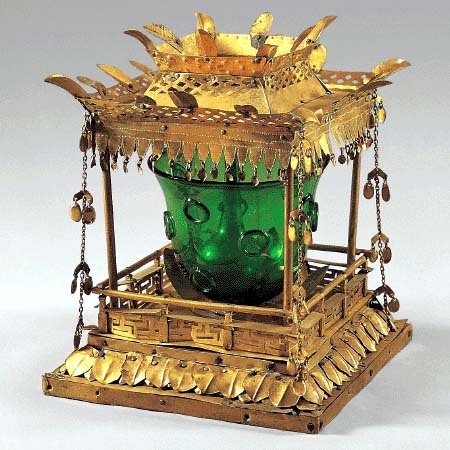
Reliquary. Pray to its saint for guidance. From


Books
Value is 250-1000 gp. Depending on your cleric's Order in the Church, other books may also be of use to gain more insight in the workings of the divine. (GLOG: 50 - 100 gp)
  • The Exact and Subtle Art - on astrology and the paths of heavenly bodies
  • The Complete Draconic Lexicon - dictionary for High Xarsic with detailed etymology
  • Carved tablet of gray stone - ancient practices and instructions for binding outsiders
  • The Intermingling of the Great Lords - on children begotten by a mortal and a devil
  • Mage Illeswyte’s History Arcanum - facts of wizardry’s origins and development

Proscribed books
Value is 500 - 1500gp. Obviously very risky to have and study. (GLOG: 100 - 200 gp)
  • A Plea for Necromancy - addresses prejudices against necromancy
  • Jade Prayers - instructions in the form of parables on communal worship
  • Lord Ilgraine's Last Command - tale of a knight and his beguiling ways
  • The Courtier's Gift - on weaving illusions
  • The Iron Codex - black iron sheets strung together with chains - diagrams for planar travel
  • The Lost Divinities - speculation on deceased or vanished deities
  • Through the Gate of the Silver Key - outlines a deeply troubling cosmology

Equipment
These are minimum prices; rare materials or high artistry can easily increase the price up to tenfold.
  • Altar - 50 gp
  • Statue or icon - 25gp
  • Tapestry - 200gp
  • Incense, candles - 10gp
  • Reliquary - 500+gp
  • Scrying basin - 1000gp (GLOG: 500 gp)

Spell components
(GLOG: different spell system, no costly components for most spells. Keep the Augury sticks, Hallow ritual and Scrying basin at 200-500 gp each.)
  • Augury - gem-inlaid bones - 25gp
  • Clone - sealable incubation vessel - 2000gp
  • Gate - perfect diamond - 5000gp
  • Hallow - herbs, oils and incense (consumed) - 1000gp
  • Holy Aura - tinu reliquary - 1000 gp
  • Identify - pearl - 100gp
  • Legend Lore - four carved ivory strips - 200gp
  • Magic Jar - ruby that draws in light - 500gp
  • Plane Shift - tuning fork - 250gp
  • Scrying - basin with pure spring water - 1000 gp
  • Warding Bond - paired platinum rings - 50 gp

Friday, 17 May 2019

More Necromancy

I started writing up new 5E necromancy spells because regular death magic is so bare bones. Previous batch here.

Bare bones necromancy, get it?


BLOODLINK

Take a discarded bandage, curse someone from the comfort of your secluded mansion. Drawbacks, sure - you need fresh body parts of their intended victim, burn twice as many spell slots, and will need a lot of time to cast high level magic. On the plus side, you get to channel all their hate into a high gothic ritual with chanting and candles and skulls. Too bad those attract meddling hero types like flies. I see this spell being used in two ways: one, as a simple range extender to harrass too-powerful opponents; and two, as an evil working by an enemy wizard that the party will have to thwart. 

You have five days to find the necromancer before he turns the princess to stone! (Or takes over her mind via Magic Jar...)

Level 1 Necromancy - warlock, wizard
Casting time: special, components: VSM (fresh body part)
Target: someone you have a sample of flesh or blood of
Range: special

Toe nail clippings, a hair follicle, a drop of blood - enough of the soul remains in these to forge a link with the greater body. Bloodlink lets you harness that link and send another spell across it. This spell consumes the body part used to make the Bloodlink.

(Which is why cursecraft and scrying is so much easier with some fresh blood on hand. Which is why many experienced wizards never cut their nails and epilate all their hair. Freaks.)


What Bloodlink does for you
Bloodlink lets another spell  with a single target ignore the distance to the target - see the "at higher levels" section for the range. Bestow Curse yes; Fireball or Cloudkill no. If the spell requires an attack roll, you roll this at advantage. The body part must be fresh; generally, no longer than a day old. Gentle Repose can help out here. Undead flesh comes pre-preserved - liches are extra careful with lost body parts, and extra vindictive if you try to target them this way. Constructs or Elementals have no souls.

You need to power Bloodlink with a spell slot at least equal to the level of the spell that will travel across it. Want to Vampiric Touch someone at range? Pay an extra 3rd level spell slot or higher.

Thoth-Amon


How to defend against Bloodlink
Targets can sense Bloodlink by a growing sense of foreboding; an Arcana roll (difficulty 20) by themself or another makes it clear that there is a Bloodlink being formed.

These feelings of unease happen once every [largest lower category] of time remaining, so a ritual taking 1 hour to cast would give a warning every 10 minutes, then once per minute, then once per round. A year-long ritual first pings every season, then every month, week, day, hour, and so on.)

Scrying attempts by the target on the caster of Bloodlink work as if they were very familiar with them. If the target is in a Magic Circle powered with at least the same spell slot as Bloodlink, they gain advantage against any saves and the attacker rolls any attack at disadavantage. At higher levels, counter-striking via scry/teleport becomes viable.

Casting time per spell level:
L1 - 1 round. L2 - 1 minute. L3 - 10 minutes. L4 - 1 hour. L5 - 8 hours. L6 - 1 week*. L7 - 1 month*. L8 - 1 season*. L9 - 1 year*.

* 8h/day; can cast take short breaks and cast other spells during this period, maximum 10 minutes between stopping this spell and picking it up again.

I've been fiddling with a way to lower the casting town of higher level spells down to a full day, but got hung up on pricing. 10% of total character wealth (I used 1 XP --> 1 gp) sounds not unreasonable for lowering the casting time all the way, but XP progression is nonlinear and I didn't want to calculate polynomials at the table.

At higher level:
level 1-3: range 1 mile/level
level 4-6: range 10 miles/level
level 7-9: range anywhere on same plane

Again, I was tempted to tack extra effects onto the spell, like higher levels ignoring saves or even resistances. In the end I decided that this was turning Bloodlink into the one tool every wizard would want to use for getting rid of rivals - no save against Disintegrate cast from 100 miles away? No thanks. You'll get a week's worth of premonitions to prepare. Either scry for the person attacking you, or sleep in a warding circle.

The Magic Circle by John William Waterhouse (1886)

BONE CHIMES

Let's do a simpler spell. This is basically Alarm, but more freaky and useful as an early warning system against torchbearing mobs. Of course it means hiding bird bones all around your house, which may raise the kind of questions that lead the mob to form in the first place.


Level 2 Necromancy, wizard / warlock / druid
Range: jackdaw bones touched, 1 mile range from central skull
Duration: 24h

A good host is always prepared for guests - especially those of the torch and pitchfork persuasion. While Skullsight helps to spy on the mob from afar, Bone Chimes lets a necromancer know they should start paying attention in the first place.

Bone chimes enchants the bones of a jackdaw, which can then be hidden around a necromancer's abode. Each bone functions as the centre of an Alarm spell (range 20ft from the bone). The jackdaw's skull will caw the name of a triggered bone. The caster can enchant one bone per level of the spell slot used (so 2 bones minimum).

Once the bones are hidden, recasting the spell means visiting them all with the jackdaw's skull in hand. Individual bones can be included and excluded at each casting.

More creepy precautions. "Ribcage! Wing bone! Spine! Ankle!" Also works with monkey skeletons or fishbones, for necromancers in other climes.

Totally inconspicuous. From.

DEATH CURSE

Quite the opposite of subtle necromancy, this is a last all-out strike before you die. Put the fear of the Authority in the witch hunters that decide to come after you.

Level 3 Necromancy - cleric, warlock, wizard
Range: 30 feet

You die without any hope of resurrection. A Wish or Miracle can maybe rebuild something approximating you, but there will be clear personality changes and memory gaps.

That's the bad news.

Interestingly, your corpse cannot even be animated as an undead - this spell shreds every last part of your soul as you die in agony.

Or you can try and use Death Curse to overclock a Passwall spell. Who am I to judge. From

Good to know you won't come back to haunt people, I guess. So what's the good news?

Death Curse is lightning fast and releases enough energy to power a hefty geas or curse. The standard spell functions like Bestow Curse, but if you have other curse-like spells prepared (see below), you can use those instead.

This spell is fast enough to cast as a reaction (5E) to something that would kill you; a fatal wound, an incoming fireball, a deadly axe swipe, a dragon landing on you. Can use this after you hear how much damage you will take, but otherwise has to be used right away or not at all.

You can target anyone within 30 feet with your Death Curse, up to the number of targets allowed by the spell effect. Make an attack if the spell effect calls for one, and targets make any save to resist the spell at disadvantage. If you only target the person who kills you, they do not get a save at all.

Can you make every spell a Death Curse if you're undead? I'd rule no, but my players don't need to know that.

Powering this spell with a higher spell slot lets you unleash more inventive curses. Spell effects last for 1 day per level of the spell slot unless permanent (i.e. death spells).

Good spell effects for Death Curse are:

(3rd level slot) - Bestow Curse, Fear, Slow
(4th level slot) - Confusion, Polymorph
(5th level slot) - Geas, Nightmare, Modify Memory
(6th level slot) - Eyebite, Otto's Irresistable Dance
(7th level slot) - Etherealness*, Sequester, Symbol
(8th level slot) - Antipathy**/Sympathy***, Feeblemind, Maze****
(9th level slot) - Imprisonment, Power Word Kill

Obviously these spells need some ruling to make them work well as ongoing curses. Here's my take on things:

* target becomes ethereal -a ghost- for the duration. Does not need food or drink.
** "may you never know love"
*** "may you smell delicious"
**** target still needs food and drink for the duration. Escape checks rolled once per day, not per round. Planar travel spells should also work, or try Banishing yourself to your home plane.

A death spell? You'll wish it was a death spell. Now Otto's Irresistable Dance forever.

Saturday, 27 April 2019

Slightly subtler Necromancy

A fireball can cook an enemy platoon, polymorph can turn a bishop into a frog. But only a necromancer can rip out your soul and reanimate your husk to hunt down your friends. Necromancy spells in 5th edition D&D are wicked but vulgar. They are spectacular; they are terrifying; and apart from some of the curses* they are hard to disguise.

* curses: such as blindness/deafness, bestow curse, ray of sickness/enfeeblement, or eyebite.

Use necromancy in front of a crowd and you will be feared, then hunted as an abomination. There has to be more to this school than slinging death spells like a culty loon. Why do subtler people get into death magic and what spells do they learn?

The hand? I don't need the hand. This talisman though... (FeliciaAcano / Deviantart)


I may be trying to inject too much realism into a fantasy game, but if your magic isn't of much mundane use** and cannot be used openly, why study it at all? A necromancer should be subtle if they want to survive. Their spells should make that possible, and better: they should be worth learning even with the taboo on necromancy.  Here are low-key spells*** for the hidden death wizard.

** you can question the daily usability of other arcane schools. Abjuration - how many demons are running around anyway? Evocation - I know that there's a war on, but do we need artillery on daily standby? And so on. At least an evoker can help out by protecting a village from bandits and a diviner can find smugglers for the lord. There's little use for a witch who can raise undead at a whim.

*** consider this post an homage to Goodberry Monthly's excellent post of necromancy spells.


WHAT NECROMANCY CAN BE ABOUT

Death; souls; life force; memories. Necromancy is concerned with what is in the blood or in the bones. Visceral stuff, more than superficial enchantment or transmutation.

A necromancer learns to find the memories locked in the lower soul, the soul that stays with a body. They learn from the dead, call up spirits to advise them, let themselves be partially possessed, splice a foreign soul onto their own to power a graft.


Fine, sometimes a huge zombie is exactly what you need. (Dresden Files / Dead Beat. Awesome.) - DSillustration / Deviantart


JUST GIMME THE SPELLS I NEED THE SPELLS


My Father’s Axe
1st level Necromancy (wizard/warlock)
1 minute to cast, range: touch, components: VSM (the item)
Concentration up to 1 round / level
Binds the spirit of a dead owner to an heirloom tool - an axe, scythe, pen , etc. For the duration, you have proficiency in using the tool or weapon, or advantage if already proficient.

Relaxing your concentration on this spell voluntarily lulls the animating spirit to sleep, recasting wakes it again. Breaking concentration because of damage or a distraction risks the spirit running wild; Wisdom save versus the spell DC, or act without proficiency (or with disadvantage if you didn't have proficiency to begin with). In this case, can only put down the item on a successful save; it stays wild and uncontrolled until the maximum duration lapses.

At higher level: level 2 - duration 1 minute per caster level, level 3 - the item will work for another than yourself, level 4 - duration 10 minutes per caster level, level 5 - duration 1 hour per level and no more concentration required (or chance of the spirit breaking its binding). 

For when you don't dare to bind a spirit to its own corpse or allow yourself to be ridden by it. A utility spell to get temporary proficiency in a tool or weapon. Limited in that you need to find an actual heirloom, useful because it lets you function as a Jack of All Trades, using thieves' tools, a poisoner's kit, a sword and so on. Can double as a curse if you break concentration while someone else is using the item. I'd allow this spell to automatically decypher a code or disable a trap if they had a tool from the creator.

Now you know why necromancers steal grave goods. That cup's owner used to mix some brilliant poisons. Found here.


Bone Memory
2nd level Necromancy (wizard/warlock)
10 minutes to cast, range: self/touch, components: VSM (remains and 50 gp scrimshawed bone piercing)
Concentration up to 10 min / level

Bones remember how they moved in life. You bind someone's lower soul to a piece of their scrimshawed bone and wear it as a piercing. (Actually it just needs to taste your blood once and stay in skin contact.) For the duration of the spell, you can use one Str/Dex/Con skill the deceased knew in life. (Athletics, Acrobatics, Sleight of Hand, Stealth).

At higher level: level 3 - can grant this spell to a willing target (who you need to pierce), level 4 - also gain proficiency in a physical saving throw the deceased had (may be for another ability than the skill is associated with).

Generally useful to have a piece of bone of a famous thief, acrobat or strongman. More specifically, if you have a bone of someone who knew the traps in a hallway, I'd allow this spell to show which trapped tiles and locks to avoid. Good way for the DM to feed information to a party. "The bone anklet sucks in another drop of your blood and nudges you to a painting. Behind it, you find a hidden alcove."

A scrimshaw magnifying glass - smear blood on it and you'll be amazed at what it shows you. From.
Crow's Brew
2nd level Necromancy (wizard/warlock)
1 round to cast, range: touch, components: VSM (a dead person's eye)
Concentration up to 1 round / level

Pluck a corpse's eye and drink it. You can mash and mix the eye with ale or spirits if you like, but you need to consume it entirely. The spell lets you see what the deceased saw right before they died: starting at the moment of death, each round you maintain this spell shows you what happened one round earlier.

At higher level: level 4 - duration becomes 1 minute per caster level, level 5 - 1 hour per level

A lesser version of Speak with Dead - you gain more limited information but without having to haggle with some obnoxious spirit. This is visual only, so try and pick up lip reading.

From

Little Messenger
2nd level Necromancy (wizard/warlock)
10 rounds to cast, range: touch, components: VSM (a tiny dead animal)
1 hour / level

Reanimates a small animal (cat-sized or smaller) as a messenger. Anoint a mostly intact animal corpse with a salve of cow fat and boiled frog meat. The little monstrosity that claws itself back to animation will carry a package up to one inventory slot (a longsword, a couple of potions) to a location or direction you command. Once it reaches its destination or when the spell runs out, the thing escapes your binding and runs amock for 1d10 rounds, then collapses. 

Ok, not subtle but definitely creepy fun. A necromancer's version of Animal Messenger. Frenzied ghoul rabbits in your enemy's bed aside, this allows you to deliver messages and light weight packages. Lasts shorter than Animal Messenger, and doesn't convey your voice, but on the plus side you can have the beastie carry anything up to the weight limit.

Dead mice in your bed? You wish it were mice.


Essential Saltes
3rd level Necromancy (wizard/warlock)
13 hours and 3 rounds to cast, range: touch, components: VSM (a body and 150 gp in lab supplies)
Indefinite duration

“The essential Saltes of Animals may be so prepared and preserved, that an ingenious Man may have the whole Ark of Noah in his own Studie, and raise the fine Shape of an Animal out of its Ashes at his Pleasure; and by the lyke Method from the essential Saltes of humane Dust, a Philosopher may, without any criminal Necromancy, call up the Shape of any dead Ancestour from the Dust whereinto his Bodie has been incinerated.”

You reduce a corpse to its essential saltes to revive them later. The alchemical preparations take 13 hours and 150 gp of supplies (doubled per larger size category) from a well-stocked lab worth 1000 gp (tomes, retorts, foci, astrolabes etc). With this urn of fine blue-grey powder, you can recall the creature to life and return it to dust at any time. The corpse must be whole for the rendering to work (dessicated mummy or skeleton is ok, but a lone skull is not) and can belong to an animal or sentient creature.

Label your urns carefully, because this spell gives no direct control over the reconstituted creature. A magic circle in binding configuration may be used to hedge in the summoned creature and negotiate terms of service. Cthulhufiles has inspiration for set dressing.

As the warning goes:
"I say to you againe, doe not call up Any that you cannot put downe; by the Which I mean, Any that can in Turne call up somewhat against you, whereby your Powerfullest Devices may not be of use. Ask of the Lesser, lest the Greater shall not wish to answer, and shall commande more than you."

Abilities: 
  • The creature remembers all that it knew in life but remembers the time since its death only as a vague nightmare. 
  • The creature has all statistics and abilities it had in life, but none of its belongings. Any missing body parts or broken bones are reflected as permanent injuries.
  • The creature knows spells prepared at the time of death but reconstitutes with all spells slots expended.

Weaknesses:
  • The creature reconstitutes suffering from 4 levels of exhaustion, which can only be cured by feeding it blood from a living victim of its own species. Every day of drinking blood cures one level of exhaustion. (Exhaustion level 1: Disadvantage on ability checks - 2: Speed halved - 3: Disability on saves and attacks - 4: hit points halved). Happens even if the creature is normally immune to exhaustion.
  • While in sunlight, the creature has disadvantage on Attack rolls and Ability Checks. 
  • Is, and can be turned as, an undead. Vulnerable to radiant damage. Has its bodily functions restored: can be poisoned or diseased, needs food and drink. Gods save you if it procreates. 
  • Casting the spell's formula in reverse causes the creature horrific pain (half speed and disadvantage on all rolls) and can be used to unbind the magic. Full unbinding costs three rounds; every round, the creature loses 1/3 of its maximum hit points. It dissolves into its essential saltes at the end of the third round of chanting.

The classic, lifted directly from Lovecraft's Case of Charles Dexter Ward. Both more powerful and way more dangerous than Animate Dead. This spell returns a creature to life with its mind intact*. Can be used to interrogate dead sages or to call up some monster and set it loose.

*What went wrong with this resurrection? (d12)
  1. Resents you for bringing it back to blood-dependent unlife.
  2. Turned sociopathic (chaotic evil) by the trauma.
  3. Wants to evade your control over it.
  4. Seeks to find and awaken a hidden monstrosity.
  5. Inhabited by strange and malevolent spirit, d6+2 HD.
  6. Lost its mind. Animalistic, shuns light, hunts victims for blood and sport.
  7. Lost many memories.
  8. Murderous. Convinced it can reclaim its life by condemning others to the pit.
  9. Convinced it is still in hell.
  10. Wants to use this second chance at life to save its soul and enter heaven.
  11. Obsessed with finding its descendants and rightful belongings.
  12. Seems perfectly rational and sane.

Label these. You wouldn't want to mix up the sage and the axe murderer. (etsy)

Untiring Flesh / Awakened Spirit
3rd level Necromancy (wizard/warlock)
1 round to cast, range: self or touch, components: VSM (a talisman crafted from a corpse)
Concentration up to 1 hour

You or the target will need to wear a mummified body part for this spell to work. A Hand of Glory or a minor relic will both work - the latter being infinitely easier to explain away to curious priests. Each talisman corresponds to one ability that can be boosted. Talismans need to be harvested from someone famous for the ability to be boosted (a strongman, a wisewoman, a silvertongued rogue, a sage).

Targets have the boosted ability raised to 18 and make all checks with this ability with advantage. Also:

  • Strength - encumbrance 36, triple jump distance
  • Dexterity - speed +10, can run across water as long as you start and end your turn on land
  • Constitution - +2d6 temporary hit points, and tireless: immune to exhaustion
  • Intelligence - hypercognition*: can ask the DM one answer and receive a short but truthful answer (as Divination).
  • Wisdom - mindreader*: can cast detect thoughts or tongues
  • Charisma - silvertongued*: can cast suggestion

* Using this ability ends the spell for you.

At higher level: add one target OR one hour of duration per spell level over 3rd. New targets will also need to have a dedicated talisman.

A boosted version of Enhance Ability. The spellcasting ability for mental abilities may be a bit powerful. On the other hand, this encourages social interaction rather than hacking, so I'll keep it.


Sure, you could go for one of the classics...

...or make one item with all the bone fetishes you might need.


Skullsight
3rd level Necromancy (wizard/warlock) (edit: originally 4th level, felt like too high)
10 minutes to cast, components: VSM (the skull and 100 gp powdered opal in milk)
Concentration up to 1 min / level, range: prepared skull on this plane

You can see out of the eye sockets of a skull that you personally prepared by casting this spell over it (which expends the 100 gp in powdered opal). Your vision works as if you were present, including factors such as darkness or mist or coverings. The skull can be anywhere on the same plane as you when you cast this spell. While you maintain this spell, your own senses are dulled to the point of uselessness.

At higher level: level 4 - duration becomes 10 min / level, level 5 - can access up to 5 skulls at a time, level 6 - duration becomes 1 hour / level and you can also hear sounds near a skull.

Somewhere between level 3 Clairvoyance (strictly close range) and level 5 Scrying (for which you only need to know your target, or have something that belonged to them).
Yes, very dread. But did you check who sourced all the skulls for your fortress? (From)

Saturday, 2 February 2019

Warlock Patron: the Blistered Squire

Warlocks work with dark forces for the power that society is keeping from them. Fourth and for now  last Patron spirit for these wicked people, part of a series. Rules and overview here.

THE BLISTERED SQUIRE

One more warlock Patron - the hellfire option. Written as a toadying henchman to a disreputable noble, who teaches dirty ways to burn their enemies to the ground. Powers from the Fiend Patron, tasks my own.

He's a snivelling toad of a man, with burn scars and scorched leather armor explaining, perhaps, the smell of smoke. But who cares? The man has a mind for devious stratagems. The Squire helps those who have been beaten to get revenge.

Alternate version: the Scorched Blacksmith knows how much it hurts to be overlooked - and how to hurt people back. The Blazing Priest is ready to teach sinners the true power of faith.

MINOR PACT - MAGIC INITIATE FEAT

To summon: Perform an act of vandalism on someone's property after you lost to them.
Service: Roll once on the Blistered Squire's list of tasks.
Forbiddance: You cannot voluntarily put out a fire.

MAJOR PACT - WARLOCK LEVELS

Forbiddance: You cannot voluntarily put out a fire.

Blistered Squire spells


spell level
spells (choose two per spell level)
1
Burning Hands, Command, Searing Smite, Wrathful Smite
2
Hold Person, Heat Metal, Shatter
3
Blinding Smite, Fear, Fireball
4
Faithful Hound, Fire Shield, Staggering Smite
5
Destructive Wave, Flame Strike, Hold Monster


Blistered Squire gifts

Revel in Destruction
Starting at 1st level, when you reduce a hostile creature to 0 hit points, you gain temporary hit points equal to your Charisma modifier + your warlock level (minimum of 1).

Honorless Gambit
Starting at 6th level, you can call on your Squire to alter fate in your favor. When you make an ability check or a saving throw, you can use this feature to add a d10 to your roll. You can do so after seeing the initial roll but before any of the roll's effects occur.

Once you use this feature, you can't use it again until you finish a short or long rest.

Fiendish Resilience

Starting at 10th level, you can choose one damage type when you finish a short or long rest. You gain resistance to that damage type until you choose a different one with this feature. Damage from magical weapons or silver weapons ignores this resistance.

Blistered Squire tasks
Every time you gain a warlock level, roll on this chart (d20) to indulge the Squire.

  1. A Dwarf caravan is transporting a vial of their precious dragonfire concoction. Get it for me.
  2. The little folk in the forest laughed at my scars. Burn their precious faerie ring to the ground.
  3. The sherrif has caught a witch in the woods. She is bound for the noose - convince the lord to make it a burning.
  4. This is the second time the Fairy Prince has beaten me in a race. Maim his horse for me.
  5. Curses! I was wenching a sweet succubus, but her bastard spouse barged in. Help me out by beating this asshole.
  6. The young wizard at the windmill has a talent we need to feed. Make sure he gets a scroll of burning hands.
  7. There's a traveler in town with the markings of the Kurelda order. Show this witch-burner the power of true fire and set a fire to his wagon.
  8. An old enemy is about to be declared innocent of a crime. Hide this hell dagger in their cell.
  9. Let's have some fun. Steal a potion of fire breathing from the alchemist in town and feed it to the baron's prize hound.
  10. The blacksmith is turning out such perfect workmanship for the baron. Stamp this inferior sword with his mark and send it as a gift.
  11. I was watching someone burn when you called. Make it up to me with a gift dagger worth 2d100 gp.
  12. All that hay out on the fields, ready to be brought in. So dry. So boring. Liven it up, will you?
  13. The joust is coming up. Make sure the Swan knight suffers a critical setback.
  14. It gets boring out here. A sweet pet would be nice - capture me [a fire-breathing animal] and I will come when you have secured it.
  15. I should like to sleep somewhere warm and calm for a change. I will turn into a stone idol and you'll hide me in the library at the manor house.
  16. This girl I'm helping out is in tears. There is a minstrel singing the praises of her rival in love - go smash his lute and break his fingers.
  17. I have an idea but I need someone to work out the fiddly details. Get me the services of a capable wizard (level 3+) for a month.
  18. Time to show that you have what it takes. Heat a piece of metal until it's red hot, then take it out of the furnace - with your bare hands.
  19. If I cannot get adoration I shall have respect. Chisel my sign into the church altar and set the building on fire. Do it tomorrow.
  20. See that church knight's shield, so black, so intimidating, so invulnerable? All it needs is the right dedication. Hide my sign on the inner rim.